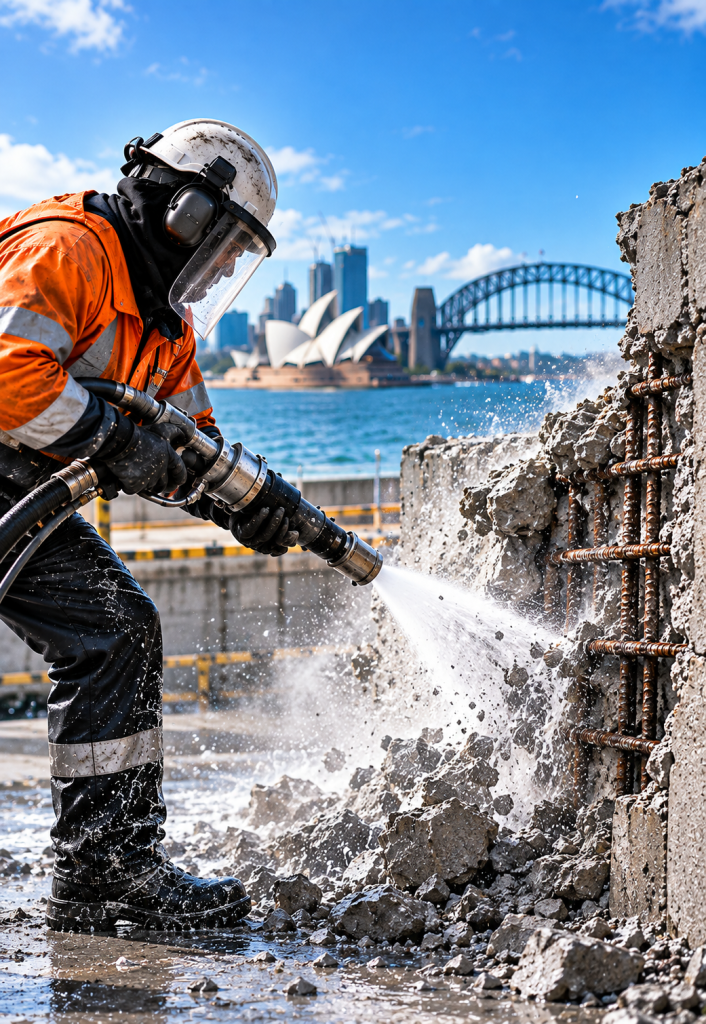
high pressure water blasting plumber

Professional Ballast Tank
Cleaning
Services

H2O Quantum Tech Clears Ballast Tanks And Sediment

Ballast tanks are the part of the vessel nobody sees between surveys, and they are where corrosion does its quietest work. 


At H2O Quantum Tech we provide ballast tank cleaning services that remove mud, sand, sediment, hard scale, corrosion product and failed coating from double bottoms, wing tanks, peak tanks and duct keels. 


Our crews work around frames, brackets, stiffeners and stringers where sediment actually collects rather than just clearing the open floor. If you are searching ballast tank cleaning near me with a dry dock or survey date approaching, our teams cover Sydney, Perth and regional Australia and mobilise inside 48 hours.

What Sediment In Ballast Tanks Costs Every Voyage

Sediment is deadweight you carry for nothing and it does damage while it travels. It holds moisture and chlorides directly against structure, so pitting develops under the mud where no coating survives and no survey looks first. It blocks suctions, strainers and bilge lines, so ballast operations slow down at the worst moment. It carries organisms and sediment between ports, which puts your ballast water compliance position at risk. And when a coating condition survey finally happens, sediment hides the very areas the surveyor needs to assess. Managers who search marine tank cleaning near me once a survey has raised a condition are already funding steel work that cleaning would have flagged years earlier.

Why Hand Digging Ballast Sediment Wastes Dock Time

Shovelling mud out of a double bottom is slow, exhausting and dangerous. Access is through small manholes, the space is enclosed, the atmosphere needs constant monitoring, and progress is measured in buckets. Crews tire, and the sediment tucked behind brackets and under stringers gets left because reaching it by hand is impractical. Our UHP ballast tank blasting and ballast sediment removal services use lances and remote heads with vacuum recovery, so material is mobilised and extracted rather than carried out, and marine confined space cleaning proceeds with far fewer people inside the tank for far less time.

How We Clean Tanks Around Frames And Stiffeners

Structure dictates the method. Our supervisor reviews tank arrangement, access, sediment depth and coating condition, then sets pressure and lance configuration for the substrate, because a tank going to coating needs a different finish to one going to survey. Sediment is mobilised and vacuum recovered, then hard scale and corrosion product are removed from plate, brackets and weld seams. Where recoating follows, our ballast tank coating preparation crews take the surface to the standard your paint supplier requires, including soluble salt testing. Our vessel sludge removal services handle the recovered material with containment and licensed disposal, and our class survey tank preparation work leaves structure visible for the surveyor.

Why Ship Managers Book Us For Survey Preparation

Because a tank that presents well is a tank that surveys well. Clean structure means findings are based on actual condition rather than on what could not be seen, and it means any steel renewal is identified while the vessel is already in dock instead of after it sails. Our ballast tank cleaning Sydney and marine tank cleaning Perth crews work dry dock, slipway and alongside, on continuous shifts alongside your other trades. Our ship ballast maintenance contractors and ship tank cleaning Australia wide teams provide confined entry controls, gas testing, standby and rescue arrangements, plus photographic records of each tank handed over.

What Your Ballast System Gains From Scheduled Cleaning

  • Your structure is visible for survey instead of buried under sediment.
  • Your pitting and corrosion are found early, while options are still cheap.
  • Your suctions, strainers and lines stay clear for reliable ballast operations.
  • Your deadweight is not wasted carrying accumulated mud and sand.
  • Your coating work starts on a surface prepared to your supplier standard.
  • Your crew spends far less time inside the tank because material is extracted.
  • Your recovered sediment is contained and disposed of under licence.
  • Your survey file receives photographic records for every tank handed over.
  • Your enquiry is answered 24/7 across Sydney, Perth and regional Australia.

Arrange Your Ballast Tank Clean Before Next Survey

Sediment compacts and corrosion advances every voyage the tank stays as it is, and steel renewal only gets more expensive once a survey condition is recorded against the vessel. Cleaning before the survey gives you the findings while the vessel is already in dock and the access is already paid for. Our specialists will assess tank arrangement and condition and give you a fixed scope and duration. Contact H2O Quantum Tech now.

Our Five Stage Ballast Tank Cleaning Programme Explained

Frequently Asked Questions

Can You Clean Ballast Tanks While Vessel Is Alongside

Yes. Our crews work dry dock, slipway and alongside, subject to port and terminal approvals. Alongside work is planned around cargo operations and vessel movements so the clean does not become the reason the vessel cannot sail.

Largely yes. Existing nozzles and manways let our heads and lances reach shell, internals and dead legs, so the number of openings and the exposure that comes with them is minimised. Access is agreed with your shutdown team in planning.

It can be. Where recoating follows we prepare the surface to the standard your paint supplier specifies, including soluble salt testing, so your applicator starts immediately rather than needing a second preparation stage.

It depends on tank size, sediment depth, structure and access, and we quote a fixed duration after assessment. Continuous shift working is standard where the dock programme is tight, and multiple tanks can be run in parallel.

Contact Form

Scroll to Top